
Talk the talk
B2B - Upper intermediate
15 Lecciones
Las lecciones con candado son para estudiantes inscritos. Las marcadas «Gratis» las puedes abrir ahora mismo.

Lesson 16 — Mistakes and lessons
(Past perfect and expressions for lessons learned)
- Grammar: Grammar: Past perfect tense with examples, I had made a mistake before I learned.
- Vocabulary: Vocabulary: mistake, learn, regret, experience, improve, lesson, realize, reflect
- Speaking: Speaking: Share a personal story about a mistake and the lesson you learned.
- Listening: Listening: Listen to a story about someone’s mistake and note the lesson learned.
- Reading: Reading: Read a text about common mistakes people make and what they learn.
- Goal: Goal: Use past perfect and new vocabulary to talk about mistakes and lessons.

Lesson 17 — Time and consequences
(Time expressions and cause-effect connectors)
- Grammar: Grammar = Using time clauses with when, before, after; cause and effect with because, so; example: I waited until she arrived.
- Vocabulary: Vocabulary = meanwhile, eventually, as soon as, therefore, consequence, impact, afterward, result, trigger
- Speaking: Speaking = Describe a sequence of events using time and cause-effect words in a short story.
- Listening: Listening = Listen to a story and identify time connectors and cause-effect phrases used.
- Reading: Reading = Read a passage about a sequence of events and answer questions about consequences.
- Goal: Goal = Talk and write about events showing their timing and consequences clearly.

Lesson 18 — Descriptions
(Descriptive adjectives and complex sentences)
- Grammar: Using descriptive adjectives with relative clauses; example: The house, which is old, looks charming.
- Vocabulary: adjectives (ancient, charming, massive, colorful, narrow, peaceful, lively, shiny)
- Speaking: Describe a picture of a place or person in detail to a partner.
- Listening: Listen to a description of a place and answer questions about it.
- Reading: Read a short text describing a famous landmark and underline key details.
- Goal: Speak clearly and confidently to describe things using detailed language.

Lesson 19 — Contrast and logic
(Contrast and logic connectors: however, although, therefore, because, despite.)
- Grammar: Grammar: Using contrast and logic connectors - "Although it rained, I went out.
- Vocabulary: Vocabulary: however, although, despite, because, therefore, on the other hand, yet, since
- Speaking: Speaking: Discuss contrasting opinions on a topic using new connectors.
- Listening: Listening: Listen to a short debate using contrast and logic words.
- Reading: Reading: Read a text showing cause and effect with contrast connectors.
- Goal: Goal: Use new words to explain ideas clearly in speaking and writing tasks.

Lesson 20 — Evaluations
(Expressing evaluations with modals and linking words.)
- Grammar: Grammar: Using modals for evaluation - must, might, could; example: It must be important.
- Vocabulary: Vocabulary: evaluate, assessment, criteria, feedback, strengths, weaknesses, improvement.
- Speaking: Speaking: Practice giving evaluations about a colleague’s work using new vocabulary.
- Listening: Listening: Listen to two people giving feedback and identify their main points.
- Reading: Reading: Read a review of a product and highlight words used to express opinions.
- Goal: Goal: Be confident to share your opinions and evaluations in daily conversations.

Lesson 21 — Life decisions
(Complex sentences for explaining reasons and making decisions)
- Grammar: Grammar = Using because, so, although; Example: I moved because I wanted a new job.
- Vocabulary: Vocabulary = decision, opportunity, challenge, option, consequence, risk, priority, regret
- Speaking: Speaking = Discuss a big life decision you made and explain your reasons to a partner.
- Listening: Listening = Listen to a story about someone’s important choice and answer questions.
- Reading: Reading = Read a text about life changes and identify the reasons given for decisions.
- Goal: Goal = Share and understand life decisions clearly in English with good reasons.

Lesson 22 — Daily activities
(Present simple and adverbs of frequency for daily activities)
- Grammar: Grammar = Present simple tense with adverbs of frequency, e.g., I usually wake up at 7 am.
- Vocabulary: Vocabulary = Wake up, have breakfast, go to work, exercise, relax, cook, watch TV, go to bed
- Speaking: Speaking = Talk about your daily routine with a partner using time phrases.
- Listening: Listening = Listen to a person describing their day and answer questions.
- Reading: Reading = Read a text about daily routines and match activities to times.
- Goal: Goal = Confidently discuss daily activities and understand daily routine descriptions.

Lesson 23 — Emotions and social life
(Expressing emotions and social relationships in English.)
- Grammar: Grammar: Using modal verbs to express feelings and opinions (e.g., She might feel upset).
- Vocabulary: Vocabulary: empathy, frustration, supportive, confident, awkward, enthusiasm, trust, disappointment.
- Speaking: Speaking: Talk about a time you felt strong emotions in a social situation.
- Listening: Listening: Listen to a conversation about friendship and emotions and answer questions.
- Reading: Reading: Read a short article about how emotions affect social life and answer questions.
- Goal: Goal: Confidently talk about your feelings and social experiences in English.

Lesson 24 — Work vs daily life
(Comparing work and daily life with contrast connectors)
- Grammar: Grammar: Using contrast connectors like although, however - Although I work hard, I enjoy my free time.
- Vocabulary: Vocabulary: Work, daily life, balance, job, routine, busy, relax, responsibilities, free time
- Speaking: Speaking: Describe your typical workday and daily routine with a partner.
- Listening: Listening: Listen to two people discussing their work-life balance.
- Reading: Reading: Read a short article about tips for balancing work and daily life.
- Goal: Goal: Talk confidently about how work and daily life affect each other.

Lesson 25 — Interview language
(Interview language: polite questions and answers)
- Grammar: Grammar: questions with modal verbs (Can you tell me about your experience?)
- Vocabulary: Vocabulary: interview, experience, skills, strengths, weaknesses, responsibility, teamwork, challenge
- Speaking: Speaking: practice answering common interview questions with a partner
- Listening: Listening: listen to an interview and identify polite phrases
- Reading: Reading: read a sample job interview transcript and highlight key expressions
- Goal: Goal: use polite and clear language in job interviews confidently

Lesson 26 — Expression and feelings
(Expressing feelings and opinions using varied vocabulary and grammar)
- Grammar: Grammar: Using modal verbs for opinions - You might feel upset, She could be happy.
- Vocabulary: Vocabulary: emotions, feelings, excited, worried, calm, confident, disappointed, anxious
- Speaking: Speaking: Discuss your feelings about a recent event with a partner.
- Listening: Listening: Listen to a conversation about emotions and answer questions.
- Reading: Reading: Read a short story focusing on characters’ feelings and reactions.
- Goal: Goal: Describe emotions accurately and express your opinions clearly in conversations.
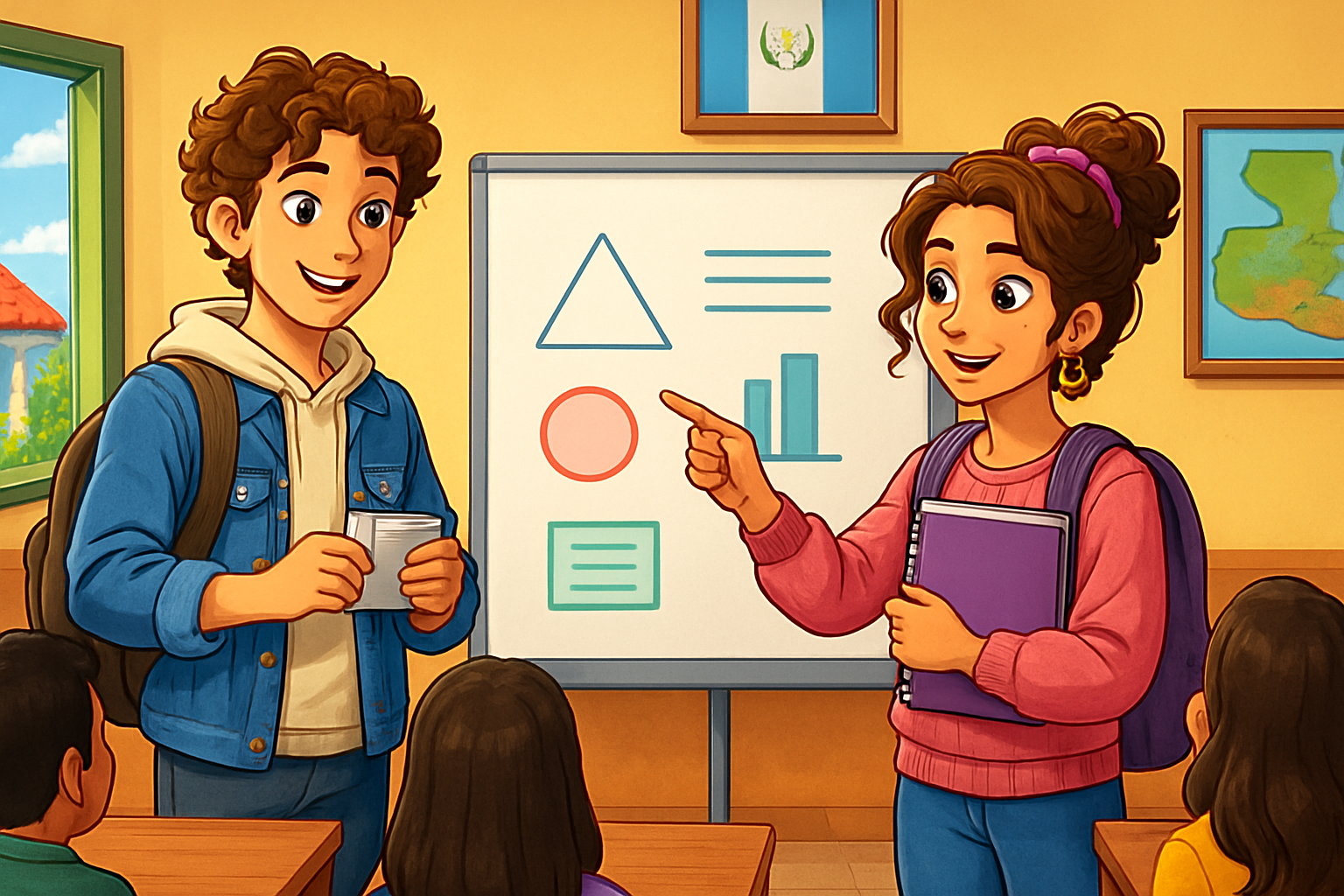
Lesson 27 — Presentations
(Giving presentations: linking ideas and presenting opinions.)
- Grammar: Present perfect continuous tense - "I have been working on this project.
- Vocabulary: Presentation, audience, slide, introduction, conclusion, main point, visual aid, handout
- Speaking: Practice giving a short presentation on a topic of your choice.
- Listening: Listen to a presentation and answer questions about the content.
- Reading: Read a transcript of a presentation and identify the main ideas.
- Goal: Speak confidently and organize ideas well in a presentation.
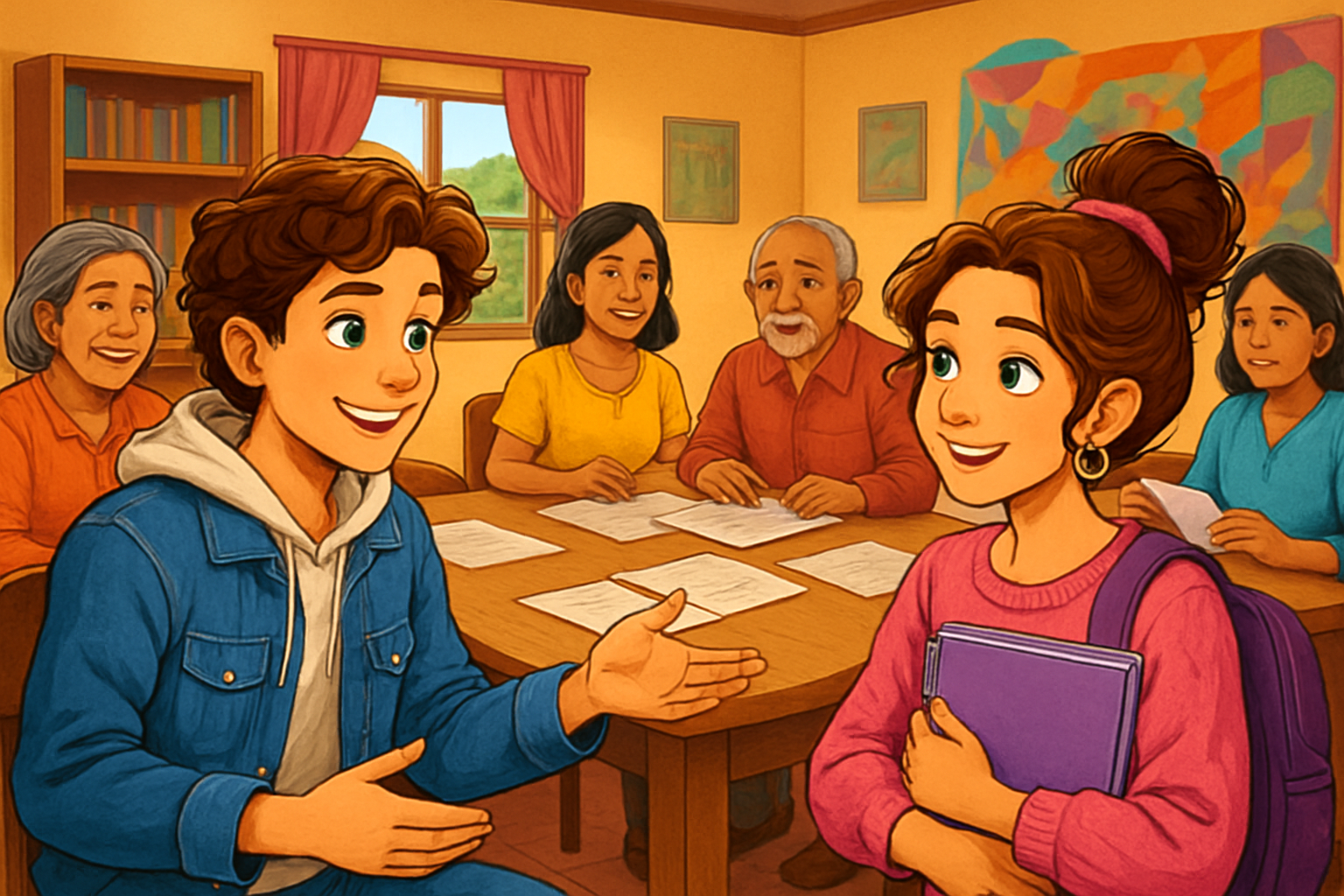
Lesson 28 — Group actions
(Expressing group actions with collective verbs and phrases)
- Grammar: Grammar = Using collective verbs: "The team decides," "We are meeting.
- Vocabulary: Vocabulary = team, group, cooperate, join, agree, organize, meet, participate, discuss
- Speaking: Speaking = Describe a time when your group worked well together.
- Listening: Listening = Listen to a dialogue about a group project and answer questions.
- Reading: Reading = Read a story about teamwork and identify key group actions.
- Goal: Goal = Talk confidently about what groups do and how they work together.
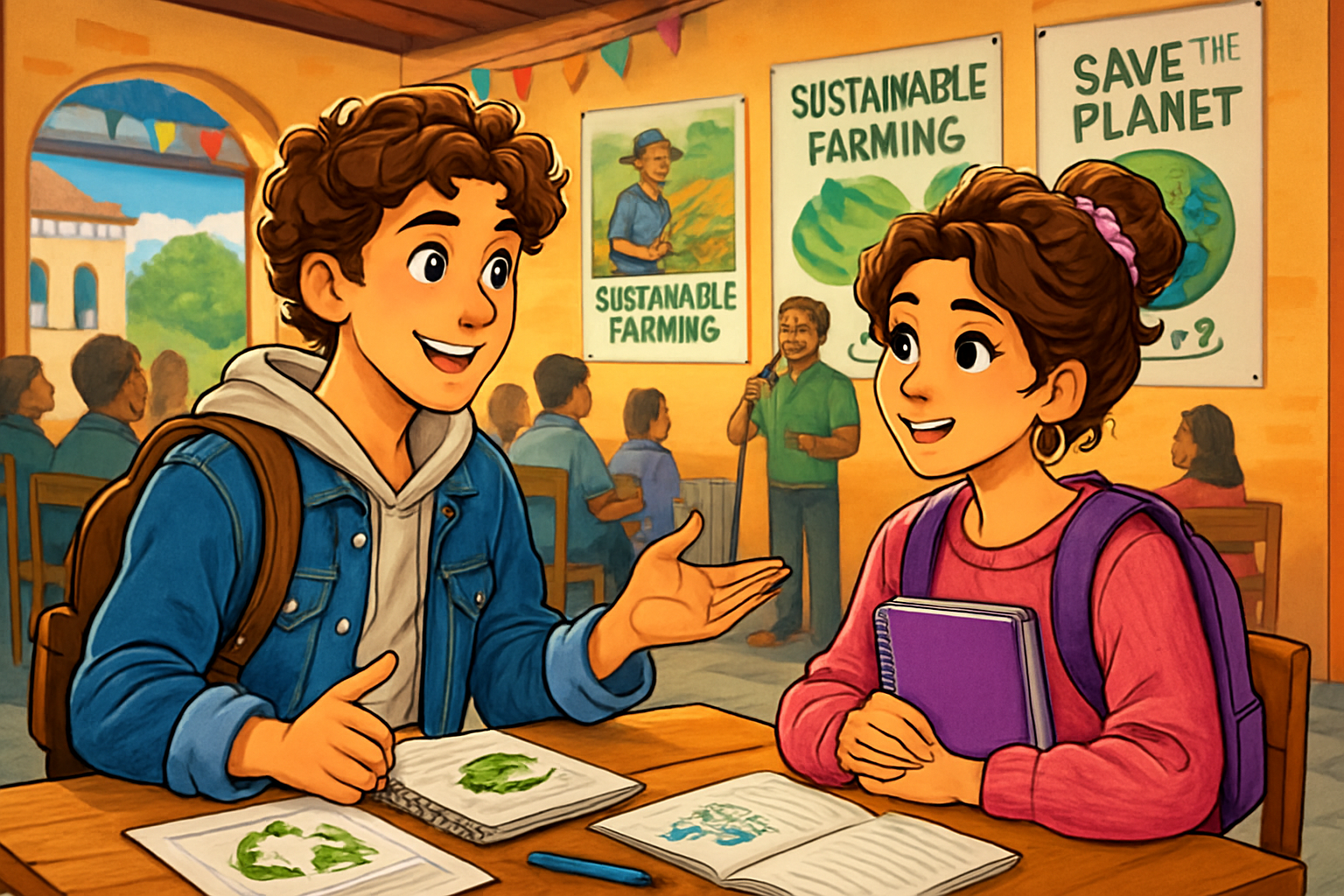
Lesson 29 — Real-world themes
(Mixed conditionals and advanced vocabulary on real-world themes)
- Grammar: Grammar = Mixed conditionals: If I had more time, I would travel more.
- Vocabulary: Vocabulary = climate change, innovation, economy, policy, sustainability, diversity, challenge, solution
- Speaking: Speaking = Discuss solutions to climate change with a partner.
- Listening: Listening = Listen to a talk about innovations in sustainability.
- Reading: Reading = Read an article about economic challenges worldwide.
- Goal: Goal = Use new grammar and words to talk about real topics clearly.

Lesson 30 — Integrated
(Complex grammar and vocabulary for discussion and comprehension.)
- Grammar: Grammar: Mixed conditionals with examples like If I had studied, I would be ready now.
- Vocabulary: Vocabulary: Negotiation, strategy, outcome, debate, consensus, proposal, compromise, clarify, persuade.
- Speaking: Speaking: Practice discussing solutions to a workplace problem in small groups.
- Listening: Listening: Listen to a business meeting and answer questions about the main ideas.
- Reading: Reading: Read an article on decision-making processes and summarize the key points.
- Goal: Goal: Improve your skills to talk about detailed situations and understand complex texts.
Powered by Quetzal Learning Labs