
Talk the talk
B1B - Intermediate
15 Lecciones
Las lecciones con candado son para estudiantes inscritos. Las marcadas «Gratis» las puedes abrir ahora mismo.

Lesson 16 — Cities, travel, food
(Describing experiences using past and future tenses)
- Grammar: Grammar: Past simple and future will for talking about travel and plans, e.g. I visited Rome. I will try sushi.
- Vocabulary: Vocabulary: city, travel, restaurant, hotel, museums, sightseeing, airport, local food, reservation, map
- Speaking: Speaking: Describe your last trip and your plans for your next travel.
- Listening: Listening: Listen to a conversation about a city visit and answer questions.
- Reading: Reading: Read a short text about popular foods in different cities.
- Goal: Goal: Gain confidence discussing city visits, travel experiences, and favorite foods.

Lesson 17 — Health & fitness
(Grammar: modal verbs for advice (should, shouldn't, must).)
- Grammar: Modal verbs for advice: You should exercise daily; You shouldn't eat too much sugar.
- Vocabulary: Health, fitness, exercise, diet, rest, stress, vitamins, gym, sleep, relax.
- Speaking: Practice giving advice to a friend about healthy habits in a short conversation.
- Listening: Listen to a short interview about someone's workout routine and note advice.
- Reading: Read a simple article about healthy habits and answer questions about it.
- Goal: Be able to talk about personal health and give simple fitness advice to others.

Lesson 18 — Public places & objects
(Present simple and prepositions of place with public places vocabulary.)
- Grammar: Grammar: Present simple with prepositions of place, e.g. The library is near the park.
- Vocabulary: Vocabulary: library, museum, park, bus stop, bench, streetlight, fountain, traffic light.
- Speaking: Speaking: Describe your favorite public place and the objects there.
- Listening: Listening: Listen to a description of a city park and note the objects mentioned.
- Reading: Reading: Read a short paragraph about a museum and answer questions.
- Goal: Goal: Use new words and grammar to talk about public places in your community.

Lesson 19 — Descriptions
(Descriptions: adjectives and relative clauses (who, which, that).)
- Grammar: Using adjectives and relative clauses, e.g., The man who is tall is my uncle.
- Vocabulary: tall, short, friendly, busy, modern, traditional, colorful, noisy, quiet
- Speaking: Describe a friend or a favorite place with details using new words.
- Listening: Listen to a description of a city and answer questions about it.
- Reading: Read a text describing a person and identify descriptive phrases.
- Goal: I can use descriptions to talk about people and places clearly and confidently.
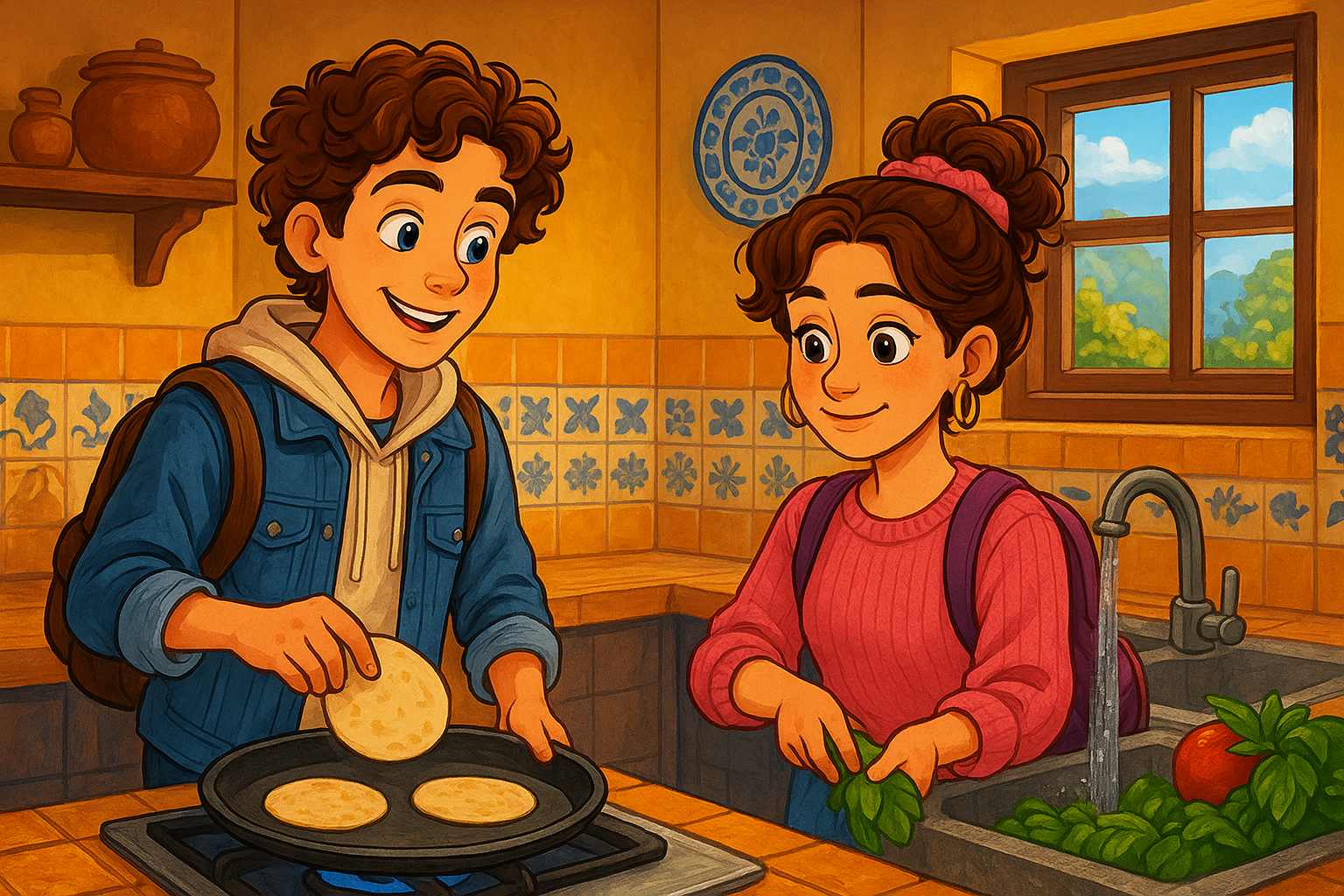
Lesson 20 — Daily tasks
(Present simple tense for daily routines and common daily task words)
- Grammar: Present simple: I wake up early, She works from home.
- Vocabulary: wake up, cook, clean, go to work, do homework, exercise, watch TV
- Speaking: Describe your daily routine to a partner in detail.
- Listening: Listen to a person describing their daily tasks and answer questions.
- Reading: Read a short text about someone's daily activities and find key information.
- Goal: Talk about everyday tasks using correct grammar and vocabulary.

Lesson 21 — Conversations
(Grammar: questions and short answers in conversations)
- Grammar: Grammar = Asking questions and giving short answers; "Do you like coffee?" "Yes, I do.
- Vocabulary: Vocabulary = greetings, introductions, asking about plans, hobbies, opinions, common responses
- Speaking: Speaking = Practice asking and answering questions in pairs about hobbies and routines
- Listening: Listening = Listen to a conversation between friends planning a weekend activity
- Reading: Reading = Read a short dialogue about meeting someone new and talking about interests
- Goal: Goal = Use questions and short answers to start and continue simple conversations
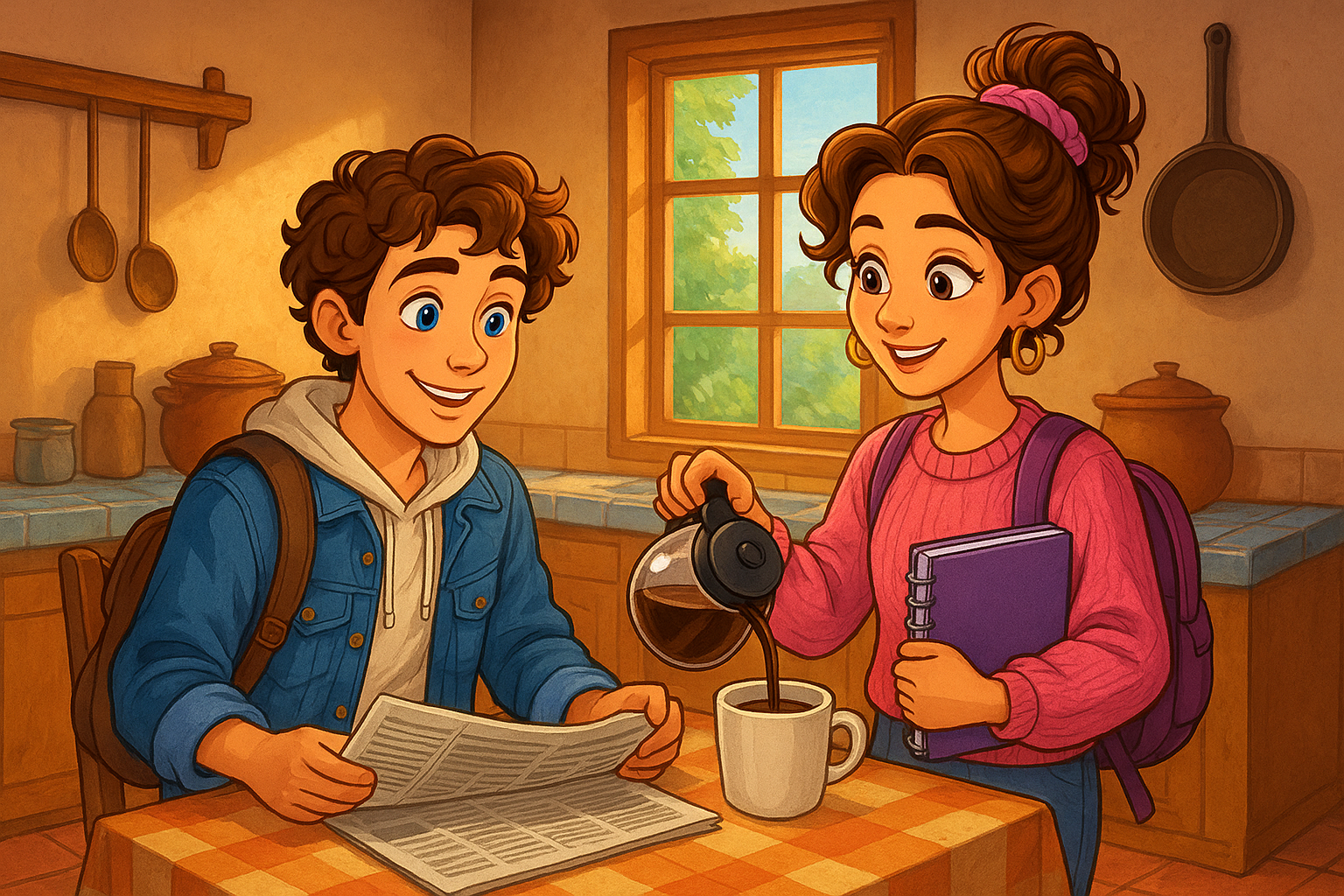
Lesson 22 — Habits and preferences
(Habits and preferences: use of 'used to', 'prefer', 'like', 'would rather)
- Grammar: Grammar: present simple for habits, 'used to' for past habits; I used to jog daily.
- Vocabulary: Vocabulary: routine, preference, usually, often, like, dislike, would rather, habit, weekend
- Speaking: Speaking: talk about your daily routine and what activities you like or prefer doing
- Listening: Listening: listen to a conversation about people's morning routines and preferences
- Reading: Reading: read a short text about someone's habits and how they changed over time
- Goal: Goal: speak confidently about your habits and what you prefer to do in daily life

Lesson 23 — Communication
(Modal verbs for giving advice and making suggestions.)
- Grammar: Modal verbs: should, must, could; Example: You should listen carefully.
- Vocabulary: Communication, advice, suggestion, opinion, message, understand, explain, agree, disagree, discuss
- Speaking: Practice giving advice using modal verbs in a role-play conversation.
- Listening: Listen to a dialogue about solving a problem with advice and suggestions.
- Reading: Read a short text on tips for effective communication and answer questions.
- Goal: Use modal verbs to give and understand advice in everyday talks.

Lesson 24 — Conversations
(Conversations: asking and answering common questions)
- Grammar: Grammar: Present simple questions and short answers, e.g. Do you like coffee? Yes, I do.
- Vocabulary: Vocabulary: Hello, how are you?, What do you do?, Where are you from?, Nice to meet you, Thank you
- Speaking: Speaking: Practice asking and answering questions about daily life with a partner.
- Listening: Listening: Listen to a short conversation and answer questions about details.
- Reading: Reading: Read a dialogue between two friends and identify the main topic.
- Goal: Goal: Speak confidently in simple conversations with new people.
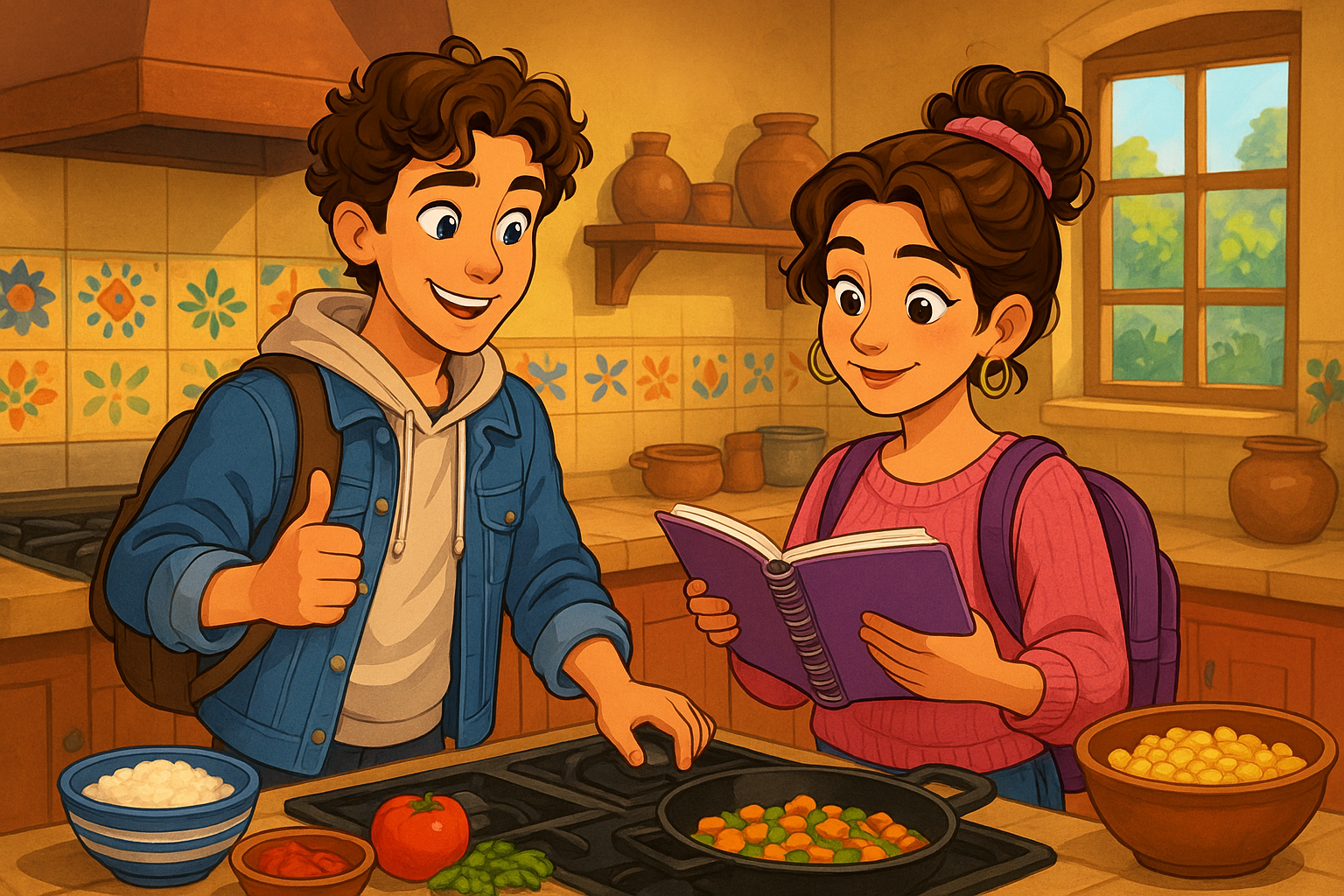
Lesson 25 — Instructions
(Giving and understanding instructions using imperatives and sequence words)
- Grammar: Grammar: Imperatives with examples, "Turn left," "Mix the ingredients.
- Vocabulary: Vocabulary: First, then, next, finally, turn, open, close, read, write, listen
- Speaking: Speaking: Practice giving and following simple instructions with a partner.
- Listening: Listening: Listen to a short instruction and answer questions about it.
- Reading: Reading: Read a list of instructions and put the steps in the correct order.
- Goal: Goal: Learn to give and follow clear instructions confidently in daily life.
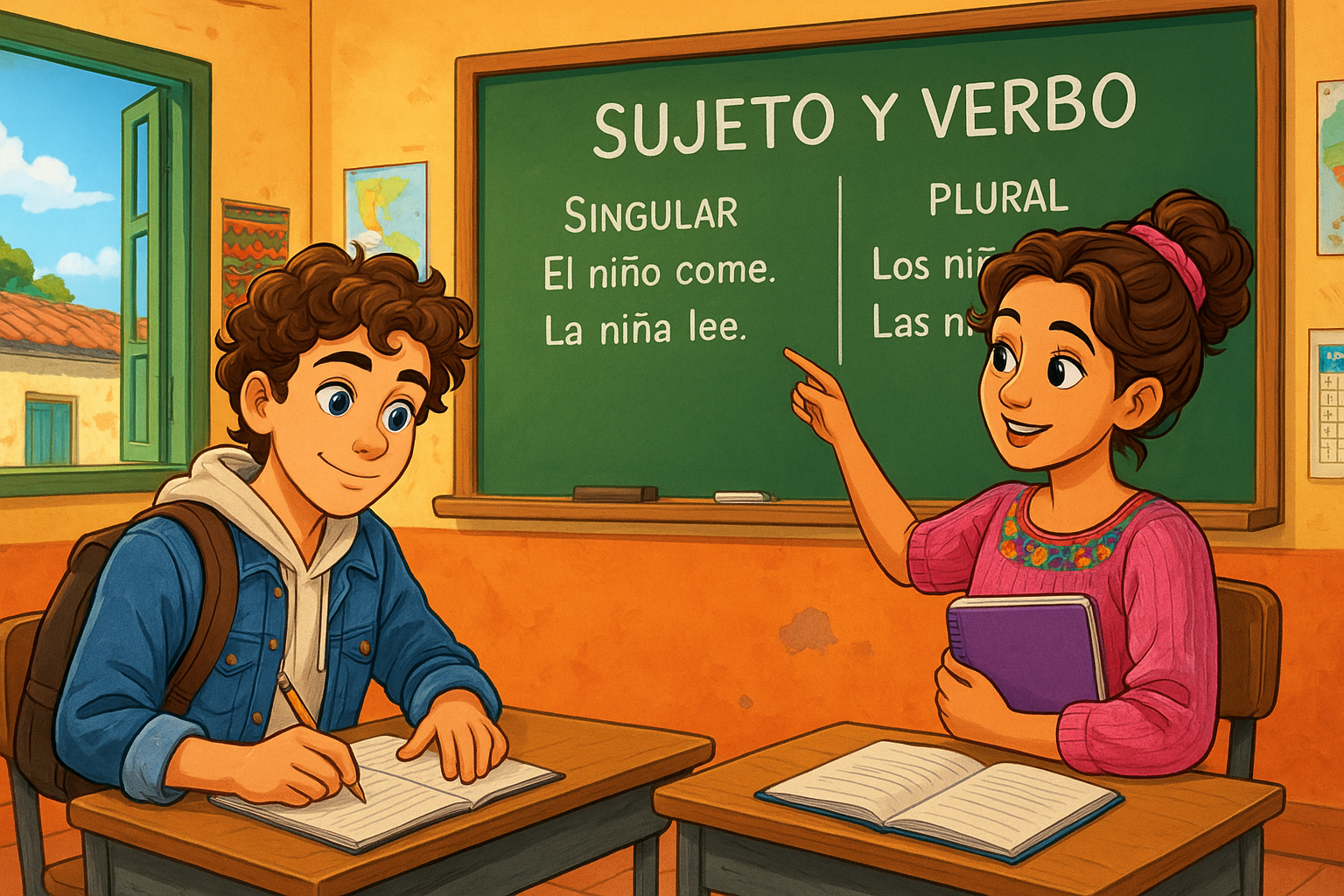
Lesson 26 — Agreement
(Grammar: Subject-verb agreement)
- Grammar: Grammar = Subject-verb agreement with singular and plural subjects. Example: She walks, They walk.
- Vocabulary: Vocabulary = Agreement, subject, verb, singular, plural, rule, correct, sentence, error.
- Speaking: Speaking = Practice short dialogues using correct subject-verb agreement.
- Listening: Listening = Listen and identify correct and incorrect subject-verb agreement.
- Reading: Reading = Read sentences and find mistakes in subject-verb agreement.
- Goal: Goal = Use subject-verb agreement to speak and write clearly.

Lesson 27 — Opinions & explanations
(Giving opinions and explanations with because, so, and I think.)
- Grammar: Grammar: Use because, so, and I think to explain reasons, for example, I think it’s good because...
- Vocabulary: Vocabulary: opinion, agree, disagree, explain, because, so, I think, reason, believe, idea
- Speaking: Speaking: Practice giving your opinion and explain why in pairs or small groups.
- Listening: Listening: Listen to a short conversation and identify the reasons given for opinions.
- Reading: Reading: Read a short text with opinions and note the explanations used.
- Goal: Goal: Speak confidently about your views and explain your thoughts clearly.
Lesson 28 — Long actions
(Grammar: Past continuous tense for long actions (was/were + verb+ing).)
- Grammar: Grammar = Past continuous: I was reading a book all evening.
- Vocabulary: Vocabulary = While, during, all day, morning, evening, for a long time, suddenly, interrupted, continue, explain
- Speaking: Speaking = Describe what you were doing yesterday at 6 pm using past continuous.
- Listening: Listening = Listen to a story and identify long actions using the past continuous.
- Reading: Reading = Read a short story with past continuous verbs and answer questions.
- Goal: Goal = Talk clearly about ongoing past actions in conversations.

Lesson 29 — Personal progress
(Present perfect and past simple: I have done / I did.)
- Grammar: Present perfect and past simple with examples: I have finished / I finished.
- Vocabulary: Progress, achievement, improve, learn, success, goal, experience, challenge.
- Speaking: Talk about three things you have achieved this year.
- Listening: Listen to a story about someone's personal progress and answer questions.
- Reading: Read a short text about personal success and underline key words.
- Goal: Talk or write about your own progress using the present perfect and past simple.

Lesson 30 — All topics
(Mixed topics: grammar and vocabulary for daily communication)
- Grammar: Grammar: Present perfect for experiences - I have seen that movie before.
- Vocabulary: Vocabulary: Travel, hobbies, food, weather, family, work, emotions, health.
- Speaking: Speaking: Talk about your last holiday with a partner using new words and grammar.
- Listening: Listening: Listen to a conversation about hobbies and answer questions.
- Reading: Reading: Read a short story about family and answer comprehension questions.
- Goal: Goal: Use varied topics to communicate clearly in everyday situations.
Powered by Quetzal Learning Labs